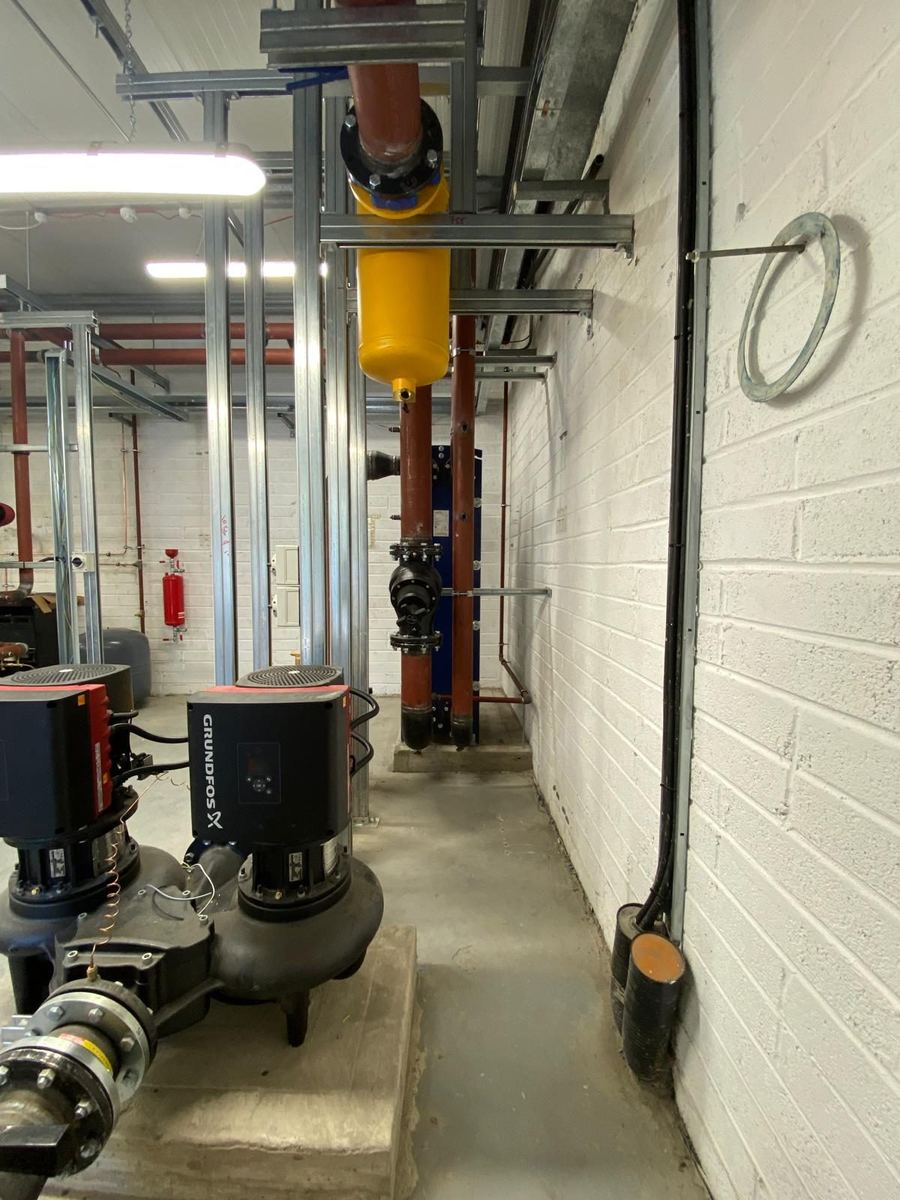
What does a PPM programme actually cover?
It is built around your asset list. Typically boilers, pumps, pressurisation, heat exchangers, calorifiers, expansion vessels, water systems and the valves and controls that go with them, at intervals set by the manufacturer guidance and by how hard the building works the plant. A school and a data suite with the same boiler do not need the same interval.
How often are visits?
Most sites settle on quarterly or twice yearly for the main plant, with water system tasks at their own statutory or guidance intervals. Some plant genuinely only needs an annual visit. We would rather set a schedule you can afford and stick to than sell a monthly visit that gets cancelled.
Do you cover reactive call outs as well?
Yes, for PPM clients. Knowing the plant is most of the value in a reactive call: we already know what is installed, what its history is and where the isolation valves are, which is usually the difference between a two hour visit and a day of investigation.
Do we get records we can show an auditor?
Yes. Every visit produces a dated record of the tasks completed, the readings taken, anything found and anything recommended. That is the point of a planned programme: an evidence trail as well as working plant.
Can you take over maintenance of plant we did not install?
Yes. We would start with a condition survey and an asset verification visit, because taking on a maintenance contract based on someone else's asset register is how things get missed. Once we know what is there and what condition it is in, we can price the programme honestly.